Two Papers from GIFT Hongyi Xin's Team Accepted at Top International Computational Biology Conference RECOMB 2026
GIFT's research team Novellab, led by Associate Professor Hongyi Xin, has had two pioneering research papers accepted for presentation at RECOMB 2026 (Research in Computational Molecular Biology), a top-tier international conference in computational biology. Two research papers focus respectively on geometric modeling methods for single-cell and spatial transcriptomic data analysis and robust cell identity recognition theory.
The two papers are titled:
· Information Geometry Reconciles Discrete and Continuous Variation in Single-Cell and Spatial Transcriptomic Analysis
· Gene-First Identity Construction for Robust Cell Identification in Single-Cell Transcriptomics
This accomplishment reflects GIFT's continuous breakthroughs in computational biology, single-cell omics and theoretical modeling.
Conference Introduction
RECOMB (Research in Computational Molecular Biology) is a globally recognized top-level academic conference in computational biology and bioinformatics. It focuses on the deep integration of algorithms, statistical theory, machine learning, life sciences and related core challenges, and holds a strong academic influence worldwide. RECOMB 2026 will be held from May 26 to 29, 2026.
Paper 1: Information Geometry Reconciles Discrete and Continuous Variation in Single-Cell and Spatial Transcriptomic Analysis
Research Background
Advances in single-cell and spatial transcriptomics allow precise characterization of cell states, development, and spatial organization. Yet, current analyses use Euclidean distance or log-transformed expression, which do not match the probabilistic nature of transcript counts and can bias results based on gene selection, expression, and sequencing depth.

Figure 1: GAIA — A single-cell omics analysis framework based on information geometry
Research Results
To address issues such as strong normalization dependency and batch effects in single-cell data, Novellab proposed a novel analytical framework, GAIA (Geometric Analysis from an Information Aspect), from an information-geometric perspective. This method treats each cell as a probability distribution of gene expression and uses the Fisher–Rao information metric to define the distance between cells.
Conceptually similar to general relativity—where distances are determined by a metric tensor rather than fixed Euclidean coordinates—GAIA uses the Fisher information metric to capture the intrinsic geometric structure of cell expression states, instead of manual normalization or gene selection.
Under this unified geometric framework, cell similarity is naturally expressed as geodetic distance on a unit hypersphere, capturing both quantitative and qualitative differences in gene expression. Compared to conventional methods, GAIA maintains stable relative relationships between cells without pre-processing and significantly reduces batch effects caused by sequencing depth variation.
Experimental results show that GAIA can more clearly reveal cell-state structures and spatial partitions in both single-cell RNA sequencing and spatial transcriptomic data, offering a new paradigm that is more robust and interpretable.
Jinpu Cai, a GIFT Ph.D. student enrolled in 2021, is the first author of the paper. The corresponding authors are Professor Jingyi Jessica Li from Fred Hutchinson Cancer Center and Associate Professor Hongyi Xin from GIFT .
Paper 2: Gene-First Identity Construction for Robust Cell Identification in Single-Cell Transcriptomics
In the era of large-scale single-cell atlases, accurately defining cell types has become a central challenge for computational biology. Existing clustering workflows often violate hierarchical consistency, especially since different clustering levels rely on distinct gene programs. Allowing pairwise cell similarity to vary can undermine the geometric consistency required for downstream analysis.
To address this challenge, Novellab proposed a new computational framework called GeCCo (Gene Co-expression Constructed identity). This shifts the clustering paradigm from cell-centered to gene-centered, quantifying gene co-expression and antagonistic relationships. Using a heuristic greedy algorithm, GeCCo constructs a gene hierarchy that adaptively yields cell identities at multiple resolutions, ensuring consistency across clustering levels while balancing partial similarities and global geometric structure.

Figure 2: Locating cell identities on pre-computed gene hierarchies
In the experiment, GeCCo demonstrated robust hierarchical consistency in human bone marrow data and identified new pre-differentiation transitional states in pancreas data, providing a more stable framework for constructing multi-level cell identity atlases.
The first authors of this paper are Luqi Yang, a GIFT Ph.D. student, and Zhenwei Huang, a GIFT undergraduate. Associate Professor Hongyi Xin served as the corresponding author.
The two findings from Novellab address long-standing issues in single-cell and spatial transcriptomic analysis from the perspectives of information geometric theory and cell identity construction, providing a new theoretical foundation for more robust, interpretable, and less prior-dependent analytical methods.
These achievements are not only significant for basic research but also offer new technological pathways for precision medicine and complex tissue analysis.
Author Profiles
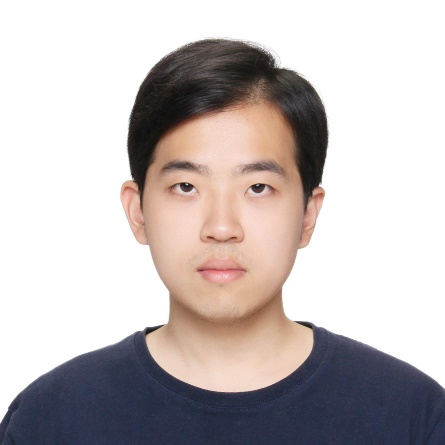
Jinpu Cai
Ph.D. student at the Global College, Shanghai Jiao Tong University. Research interests: single-cell multi-omics data analysis and cardiovascular disease mechanisms. He has published six papers as the first author in international journals and conferences, including Briefings in Bioinformatics, RECOMB, and ACM-BCB. He is also a recipient of the ACM-BCB Best Paper Award.

Luqi Yang
Ph.D. student enrolled in 2023 at the Global Institute of Future Technology, SJTU. Research interests: cell and gene representation in single-cell multi-omics data and its applications in clustering, trajectory inference and related fields.

Zhenwei Huang
Undergraduate enrolled in 2022 at the Global Institute of Future Technology, SJTU. GIFT incoming Ph.D. student, Class of 2026. Research interests: single-cell multi-omics data analysis. She led the project “Software Development Based on Single-Cell Omics Algorithm Integration”, supported by the GIFT Future Scholar Program.
Corresponding Authors
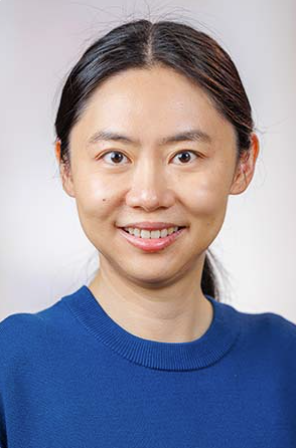
Jingyi Jessica Li
Ph.D., Professor and Program Head of Biostatistics Program in the Public Health Sciences Division at Fred Hutchinson Cancer Research Center; Professor of the Herbold Computational Biology Program; Affiliate Professor in the Departments of Statistics, Biostatistics, and Genome Sciences at the University of Washington. She also served as the Donald and Janet K. Guthrie Endowed Chair in Statistics. Jessica is an internationally renowned statistician working at the interface of statistics and biology. She develops reliable and interpretable statistical methods to analyze complex biological data, with a focus on gene function and regulation in health and disease. Her research emphasizes statistical rigor, aiming to uncover hidden patterns in gene expression while ensuring that discoveries are trustworthy — even in the presence of noise, bias or limited data quality. Her honors include the NSF CAREER Award, Sloan Research Fellowship, ISCB Overton Prize, COPSS Emerging Leaders Award, Guggenheim Fellowship, and Mortimer Spiegelman Award.

Hongyi Xin
Ph.D., Tenure-Track Associate Professor at Global Institute of Future Technology, SJTU, with a joint appointment in the Faculty of Automation, School of Electronic Information and Electrical Engineering; National-level Young Talent. He obtained a Ph.D. in Computer Science from Carnegie Mellon University and conducted postdoctoral research at the University of Pittsburgh School of Medicine. His research integrates bioinformatics and artificial intelligence, focusing on machine learning and statistical methods for single-cell and multi-omics data analysis, with applications in cancer, immunology, precision medicine and related fields. He also conducts systematic research on optimal combination algorithms and stable, interpretable AI methods. His work has been published in top international journals such as Genome Biology, Nature Machine Intelligence, Nature Communications, Nucleic Acids Research, and Cell Reports, and has been presented at leading computational biology conferences, including RECOMB and ISMB.